Books
Exploring public health through stories, field experiences, and knowledge translation.
For Dr. Rakesh PS, writing is not separate from public health practice.
His books emerge from outbreak investigations, implementation experiences, unanswered public health questions, long journeys through communities, and reflections from the field. Spanning literary non-fiction, technical memoir, and community health education, his writing attempts to bridge the distance between scientific evidence and lived human experience.
Whether documenting the emotional landscape of remote island communities, narrating the operational realities of epidemic investigations, or simplifying preventive health concepts for children and families, his work reflects a continuing commitment to making public health more accessible, humane, and socially grounded.

5
Books Authored

40,000+
Copies in Circulation

4
Editions Published

Readers Across Schools, Universities, and Public Health Institutions
Featured Books
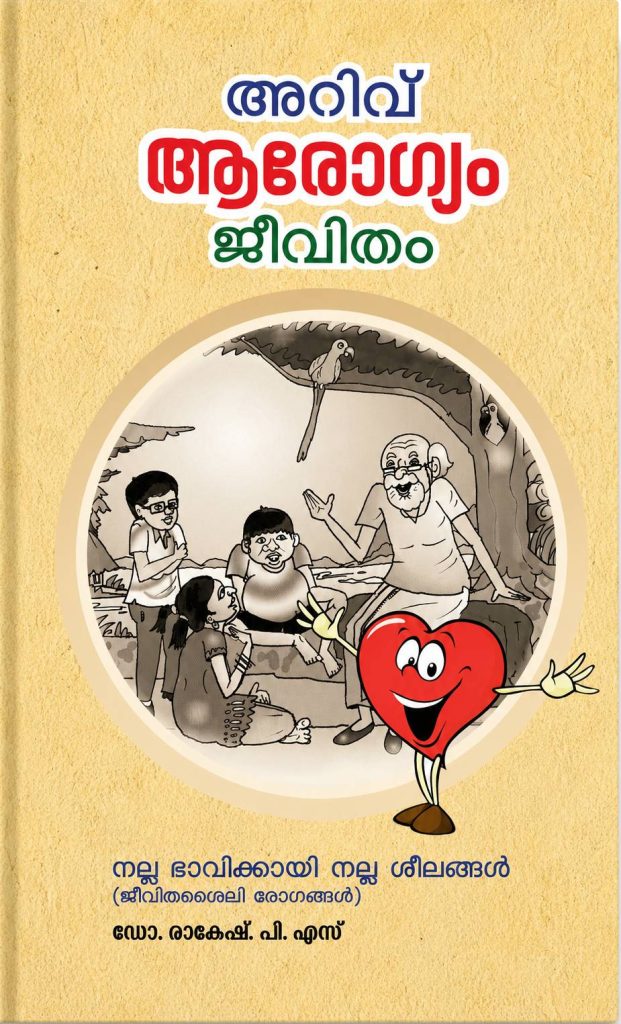
Arivu Arogyam Jeevitham
Knowledge. Health. Life.
Community Health Education Series | Health Literacy Movement
“The most powerful medicine is not found in a hospital. It is found in an informed community.”
Written in Malayalam and designed for children, families, and schools, Arivu Arogyam Jeevitham transforms complex medical knowledge into practical life lessons through stories, illustrations, and conversations.
At the heart of the series are three curious friends—Gauri, Kevin, and Thnthu—and a wise retired physician affectionately known as Vaidyarappooppan (Doctor Grandpa). Through their adventures, questions, and discoveries, readers learn about nutrition, diabetes, heart disease, stroke, addiction, cancer prevention, physical activity, and healthy living.
Beyond the Book
During school visits, Dr. Rakesh was often welcomed by enthusiastic children calling out:
“Doctor Grandpa! Doctor Grandpa!”
Schools organized skits, storytelling sessions, quiz competitions, health clubs, poster exhibitions, and awareness activities inspired by the characters and themes of the book.
Impact
- 40,000+ copies distributed
- Four editions published (2012, 2013, 2019, 2021)
- Statewide reach across schools and communities
- Fourth edition supported through a Harvard T.H. Chan School of Public Health scholarship and distributed free of cost
A Memorable Encounter
One of the most meaningful moments in Dr. Rakesh’s writing journey occurred during his Bernard Lown Scholarship at Harvard T.H. Chan School of Public Health.
Although Arivu Arogyam Jeevitham was written in Malayalam, Nobel Peace Prize laureate and renowned cardiologist Sir Bernard Lown took time to review the illustrations and educational concepts that formed the heart of the book.
Deeply appreciative of the effort to make health knowledge accessible to ordinary people, Sir Bernard presented Dr. Rakesh with a signed copy of his own celebrated work, The Lost Art of Healing, bearing the inscription:
“To Rakesh, with high admiration.”
— Bernard Lown
For Dr. Rakesh, the exchange symbolized a shared belief that medicine achieves its highest purpose when it reaches beyond hospitals and speaks directly to people, families, and communities.
Outbreak Investigations
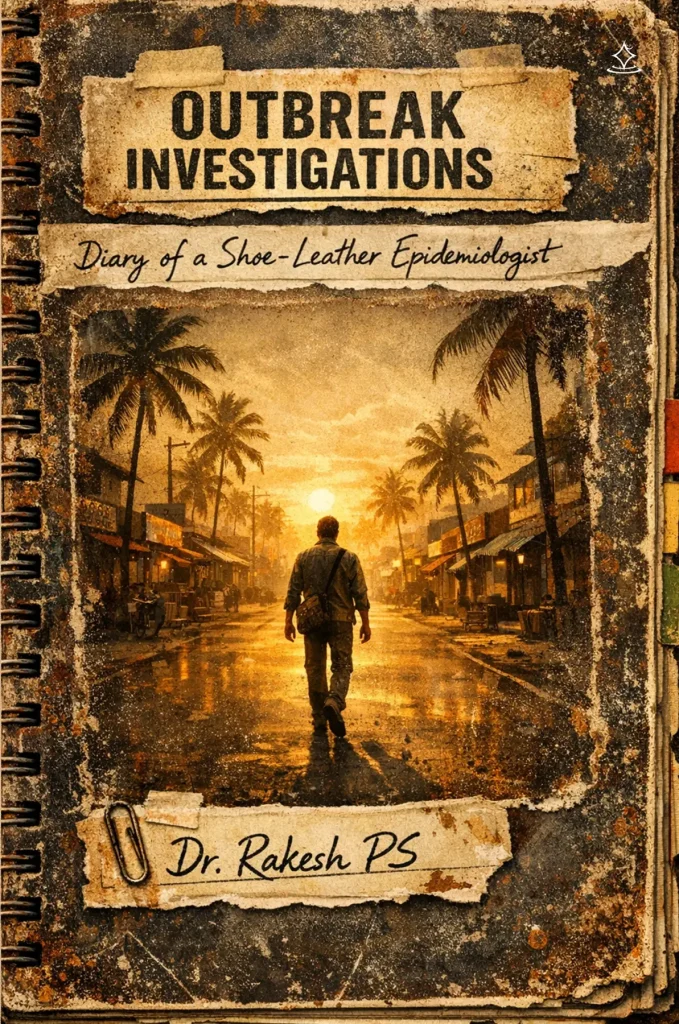
Diary of a Shoe-Leather Epidemiologist
Technical Memoir | Field Epidemiology | Public Health Practice
“Outbreaks are rarely defeated in conference rooms. They are understood in villages, hospitals, laboratories, homes, and communities.”
Drawing from real outbreak investigations and frontline experiences, this book takes readers into the realities of field epidemiology—where decisions are made under uncertainty, evidence is incomplete, and public trust often matters as much as scientific expertise.
More than a technical guide, the book examines leadership, ethics, governance, communication, and systems thinking through the lens of disease outbreaks. It serves both as a field manual and a reflective memoir for students, practitioners, and aspiring public health leaders.
A Central Idea
“Evidence doesn’t automatically lead to action. Findings remain buried on PubMed. That’s when the work stops being technical and becomes advocacy.”
Published: 2024
Ideal for readers interested in:
Field epidemiology • Public health practice • Outbreak response • Health systems • Implementation science
Echoes from the Atoll
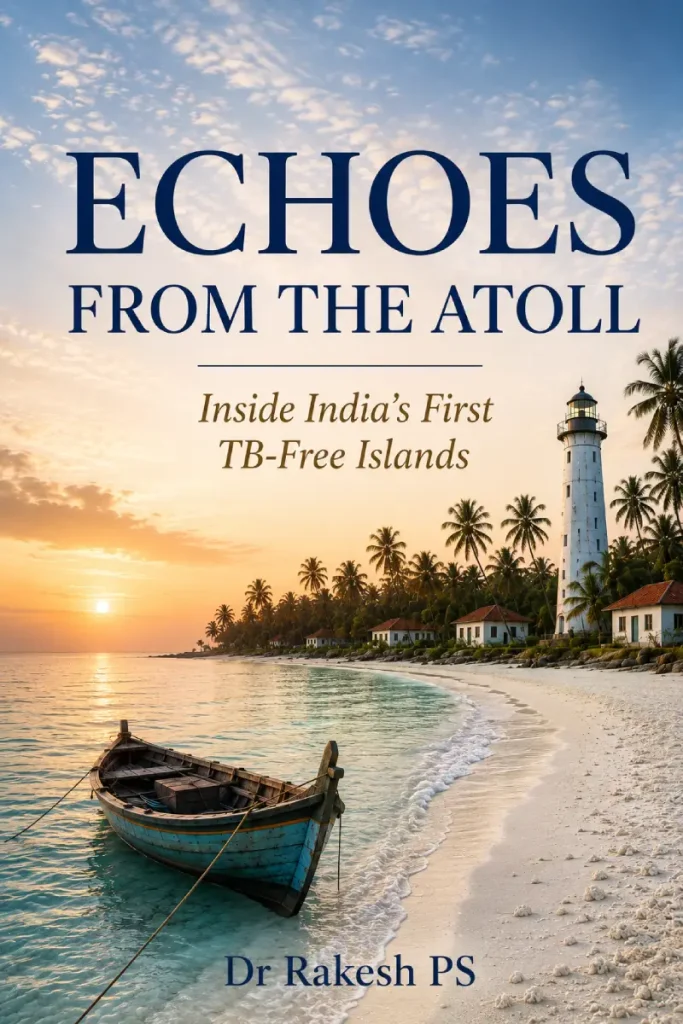
Inside India’s First TB-Free Islands
Literary Non-Fiction | Memoir | Public Health Narrative
“Some places stay with us long after we leave them.”
Across fourteen journeys to the remote coral islands of Lakshadweep, Dr. Rakesh witnessed not only an extraordinary effort to eliminate tuberculosis but also a society shaped by the sea, memory, resilience, and deep human interdependence.
Part public health narrative, part literary memoir, Echoes from the Atoll explores belonging, community, change, fragile ecologies, and the emotional landscape of island life. While tuberculosis elimination forms the backdrop, the book ultimately tells a larger story about people, place, and the worlds that modernity often overlooks.
Release Date: August 2026
Ideal for readers interested in:
Literary non-fiction • Travel writing • Public health • Island cultures • Ecology • Social change
Writing Philosophy
- For Dr. Rakesh, writing is an extension of public health practice.
- Research generates evidence.
- Programs create change.
- Writing preserves memory.
He views writing as a mechanism for translating science into public understanding, documenting institutional memory, preserving field realities, and creating conversations around equity, systems, and social responsibility.
His books attempt to move beyond academic discourse and speak simultaneously to practitioners, students, policymakers, and communities.