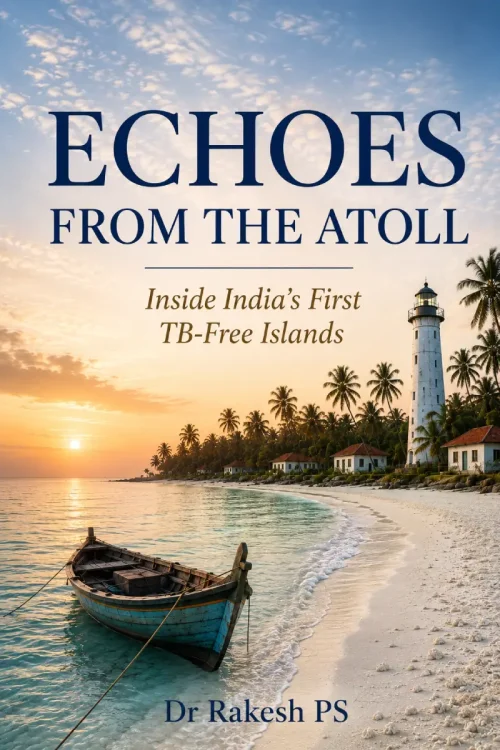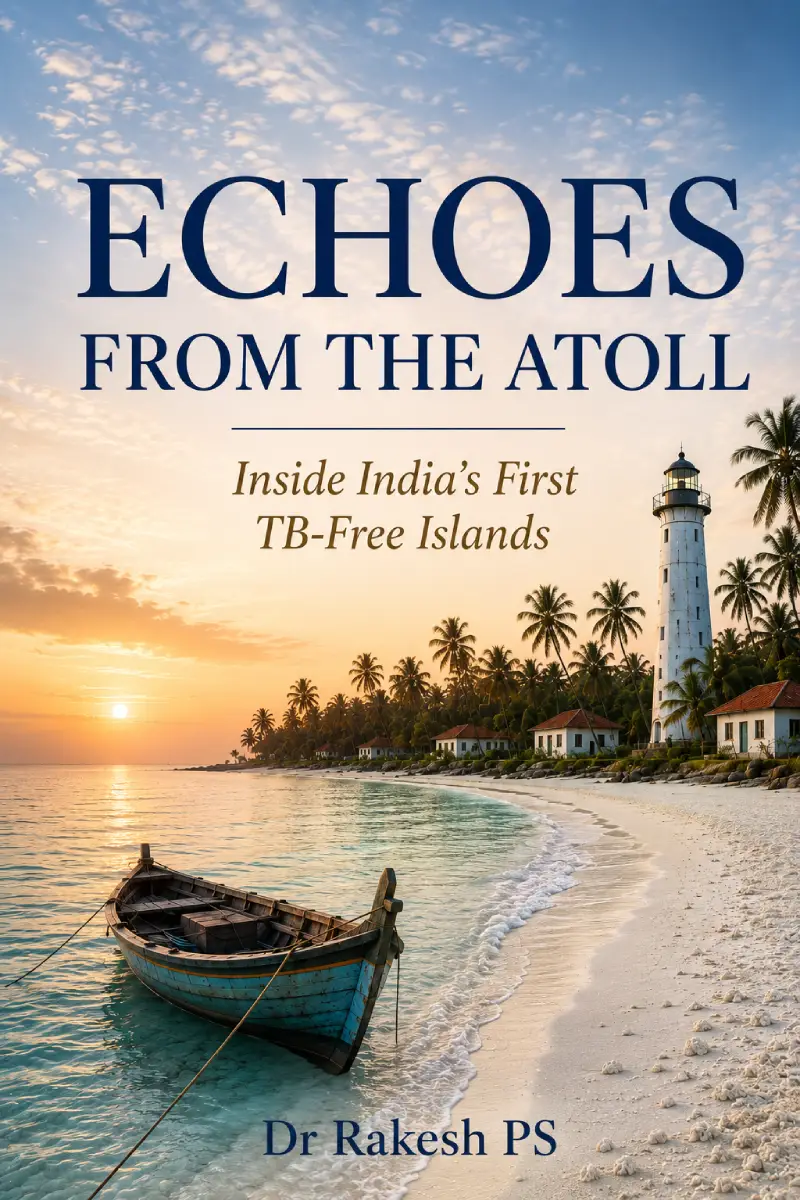
ECHOES FROM THE ATOLL
Inside India’s First TB-Free Islands
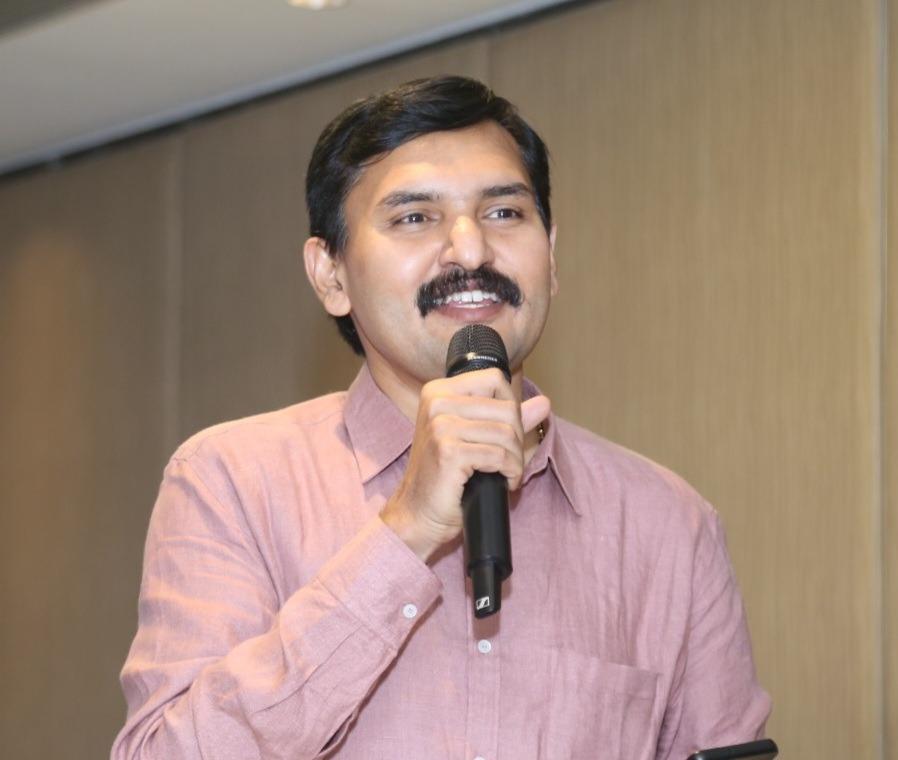
A Literary Memoir by Dr. Rakesh PS
“Some places stay with us long after we leave them.”
Coming August 1, 2026
About the Book
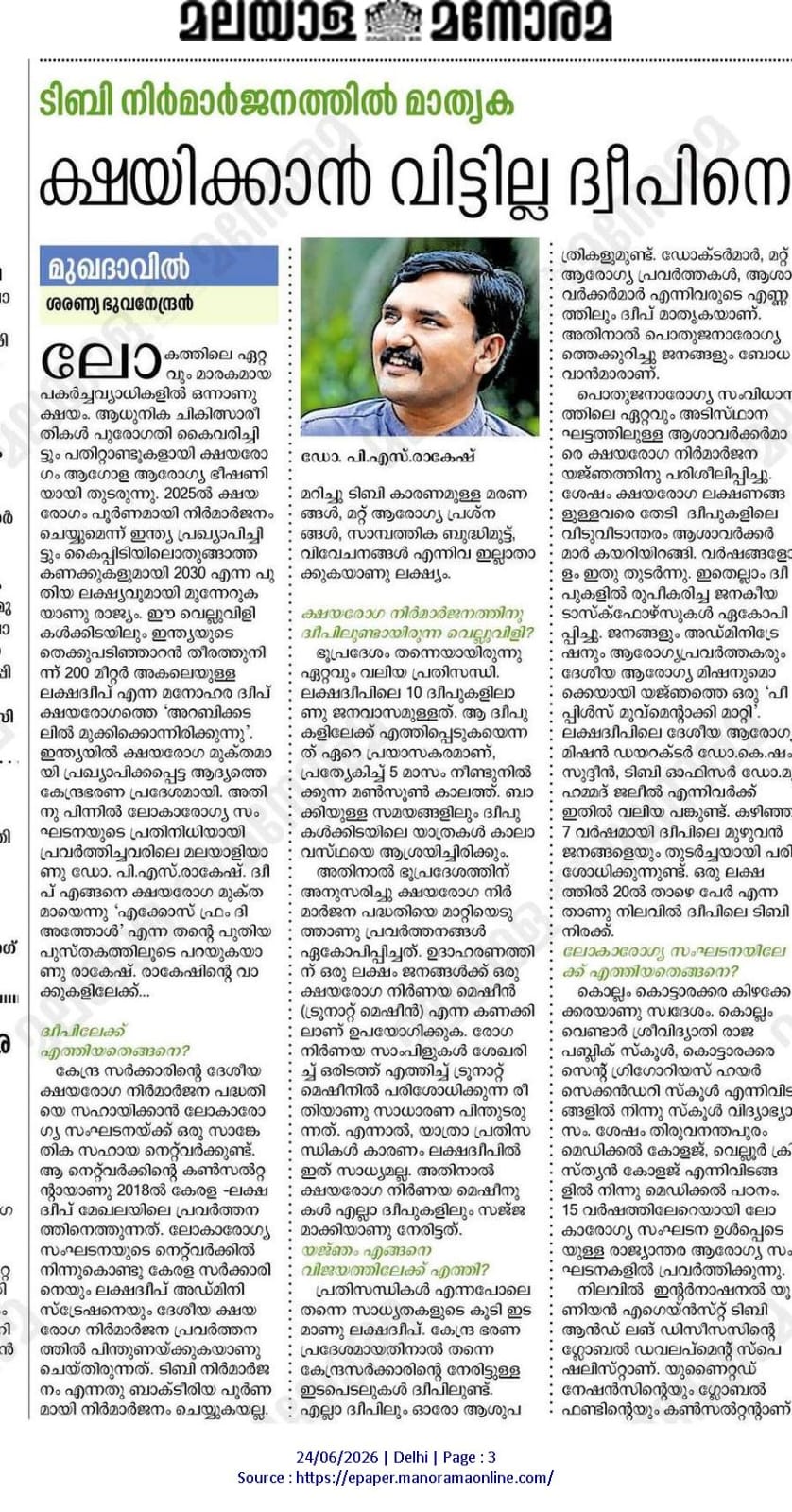
Across the scattered coral atolls of Lakshadweep, life moves to the rhythm of tides, boats, monsoons, and memory. During fourteen journeys across these distant islands, public health interventionist Dr. Rakesh PS witnessed not only an extraordinary effort to eliminate tuberculosis, but also a society shaped by the sea, silence, resilience, and deep human interdependence.
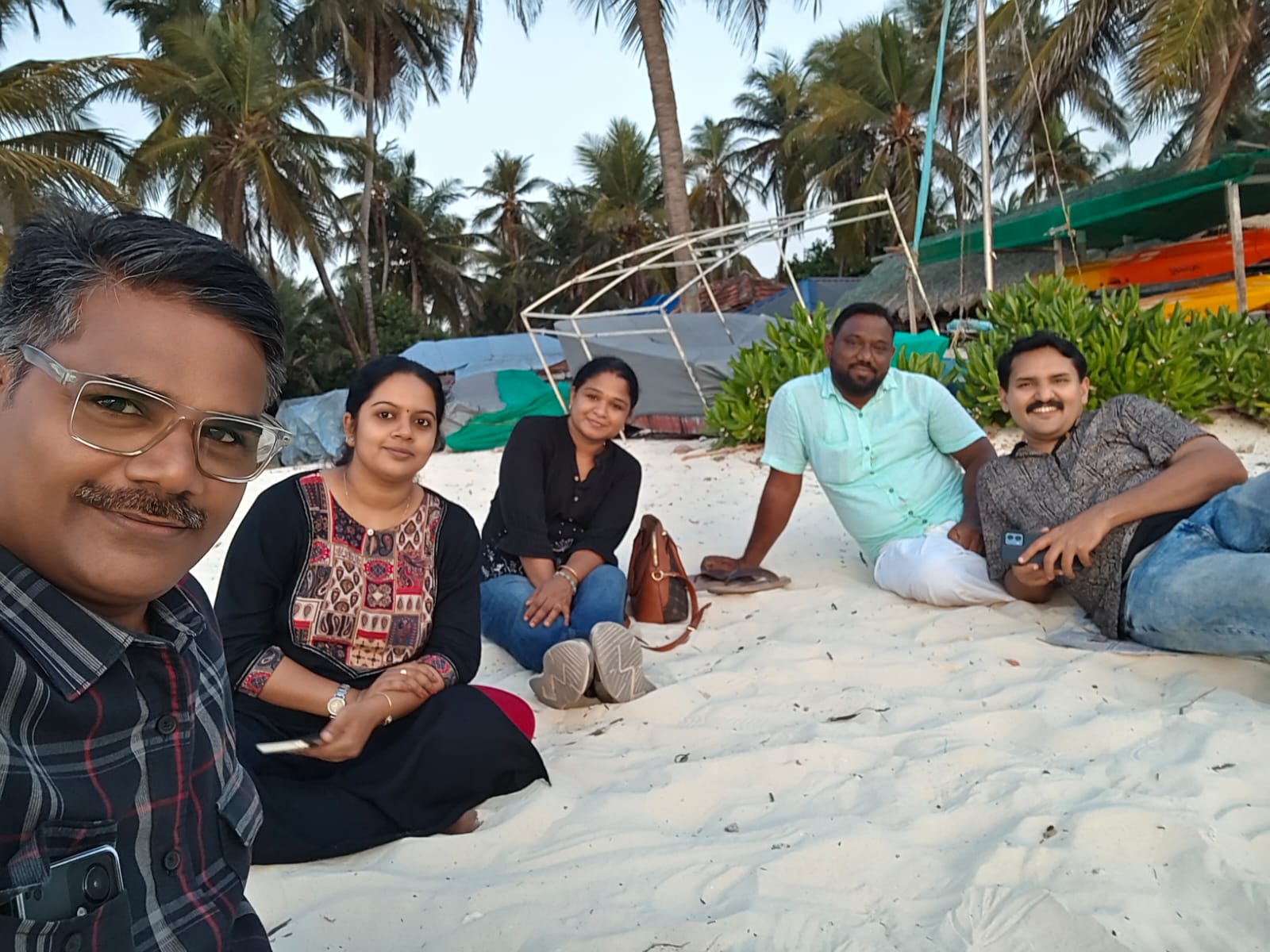
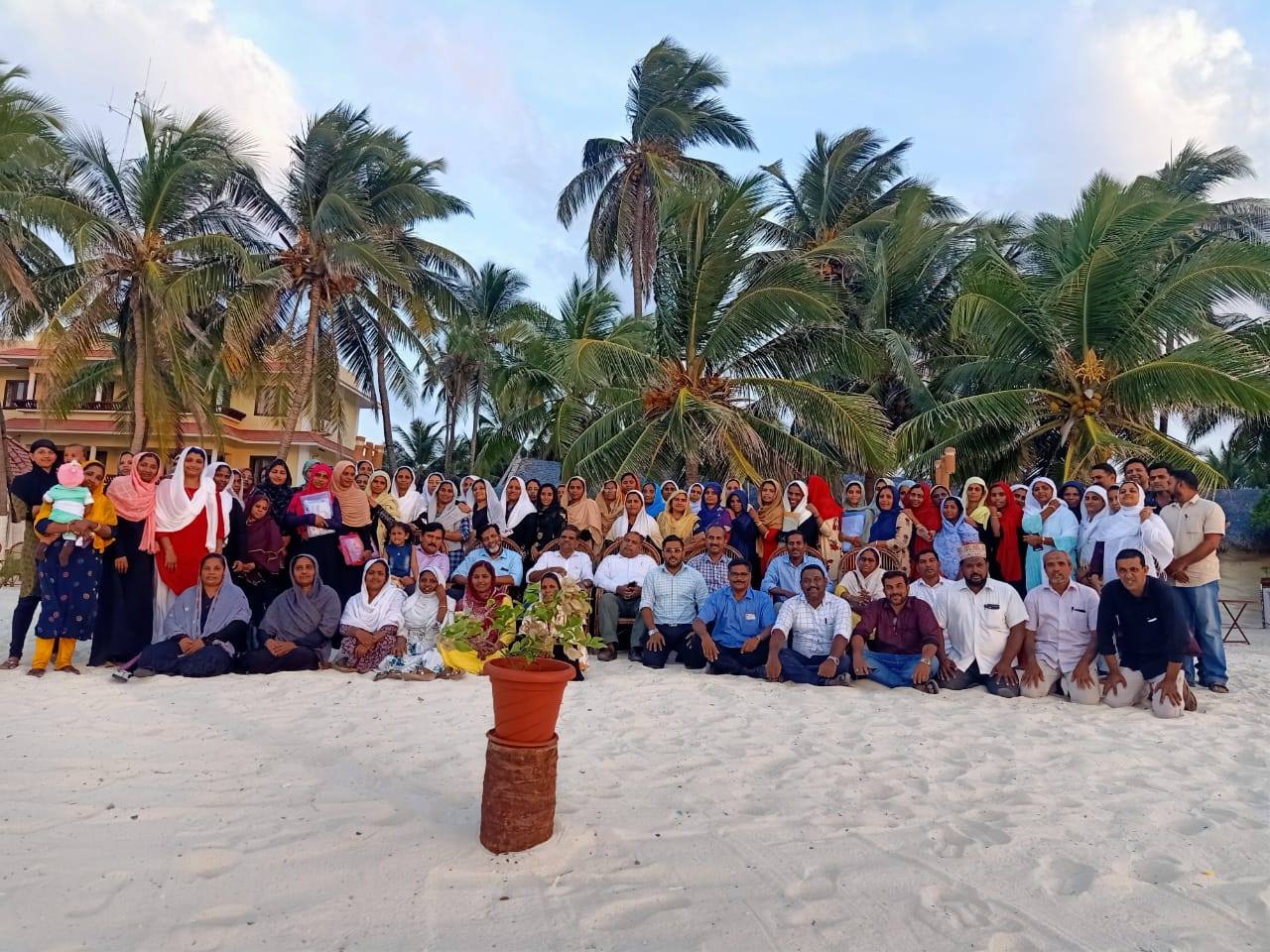
Echoes from the Atoll is neither a technical account nor a conventional travel memoir. Moving between sea vessels, moonlit beaches, village tea shops, fragile coral reefs, and quiet island homes, it traces how ordinary islanders transformed a public health mission into a collective movement that eventually made Lakshadweep India’s first TB-free geography — even as subtle external changes slowly began reshaping the emotional rhythm of island life.
Written with warmth, restraint, and deep affection for Lakshadweep, this memoir is ultimately about belonging, memory, resilience, and the fragile worlds that modernity often overlooks.
Why This Book Was Written
This book began as a public health assignment.
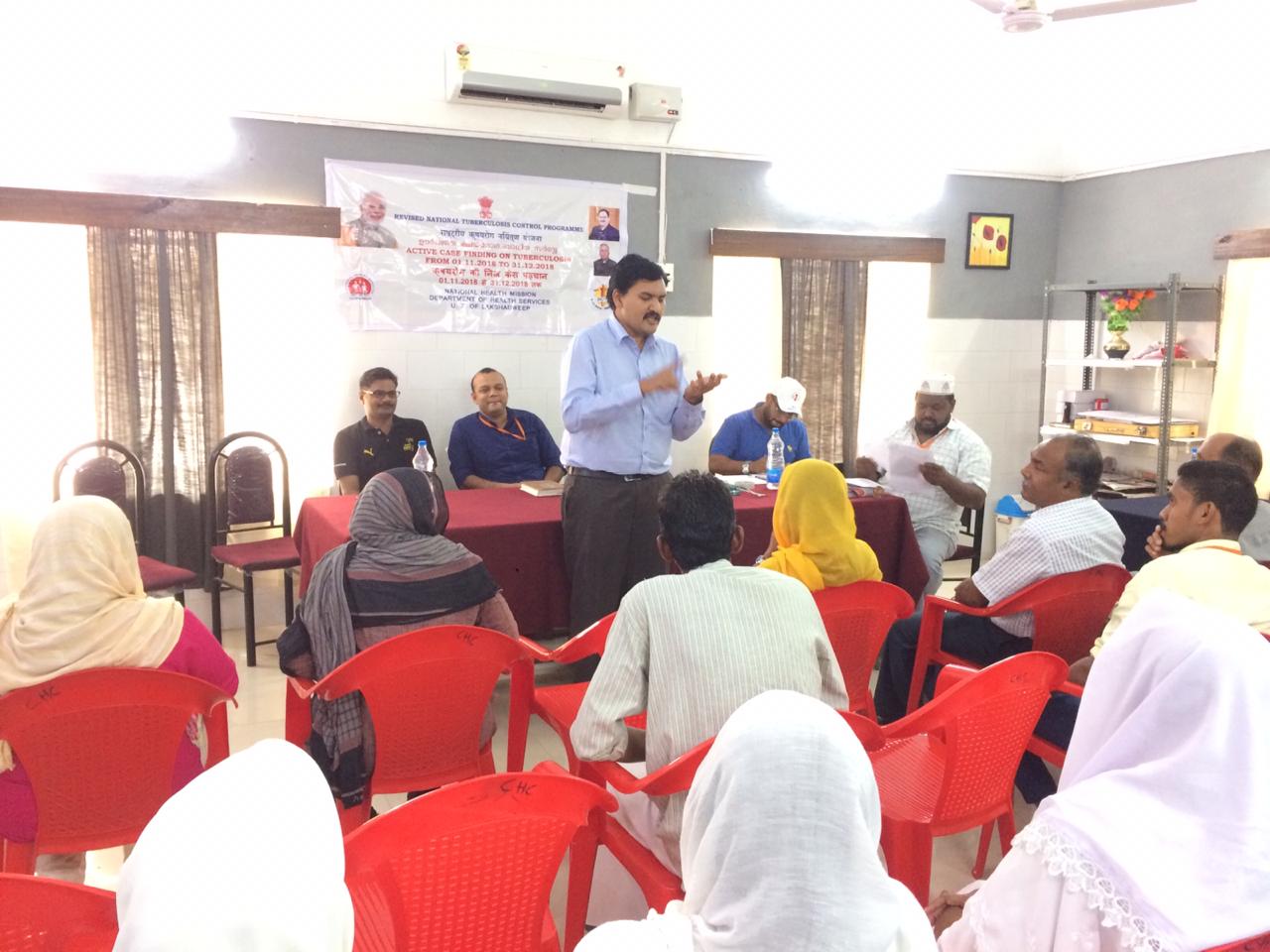
Between 2018 and 2021, my work took me repeatedly across the islands of Lakshadweep in support of the National TB Elimination Programme. What began as a professional responsibility gradually became something much deeper. The islands revealed a way of life shaped by geography, isolation, community, and an intimate relationship with the sea.
Over time, I realized I was witnessing two stories unfolding simultaneously: an extraordinary collective effort to eliminate tuberculosis, and a quieter story about memory, belonging, and change in one of India’s most unique island societies.
This memoir was written to preserve both.
Why Lakshadweep?
Lakshadweep is India’s smallest Union Territory — a chain of remote coral islands scattered across the Arabian Sea. Home to fewer than 70,000 people, the islands exist at the intersection of ecological fragility, cultural resilience, and geographic isolation.
For fourteen journeys, these islands became both workplace and classroom. The memoir offers readers a rare glimpse into a world that remains largely unseen by mainland India, while exploring universal questions about community, development, identity, and belonging.
Themes Explored

Island Life and Belonging
Peer-reviewed publications

Public Health and Human Connection
The role of trust, participation, and collective action in social change.

Memory and Place
How landscapes become intertwined with personal experience and memory.

Fragile Ecologies
Coral reefs, lagoons, environmental vulnerability, and resilience.

Change and Modernity
The subtle ways development and external influences reshape island societies.

Community Resilience
The quiet strength of people who thrive amid uncertainty and isolation.
Reflections from the Author
The Islands Changed Me More Than I Changed Them
I arrived in Lakshadweep as a public health professional carrying objectives, indicators, and work plans. I expected to contribute to the islands. What I did not anticipate was how profoundly the islands would shape me in return. Over fourteen journeys, I learned that some of the most important lessons in public health have little to do with medicine. They emerge from trust, community, patience, and the quiet ways people care for one another. This memoir is, in many ways, an attempt to honour those lessons.
Public Health Begins With Listening
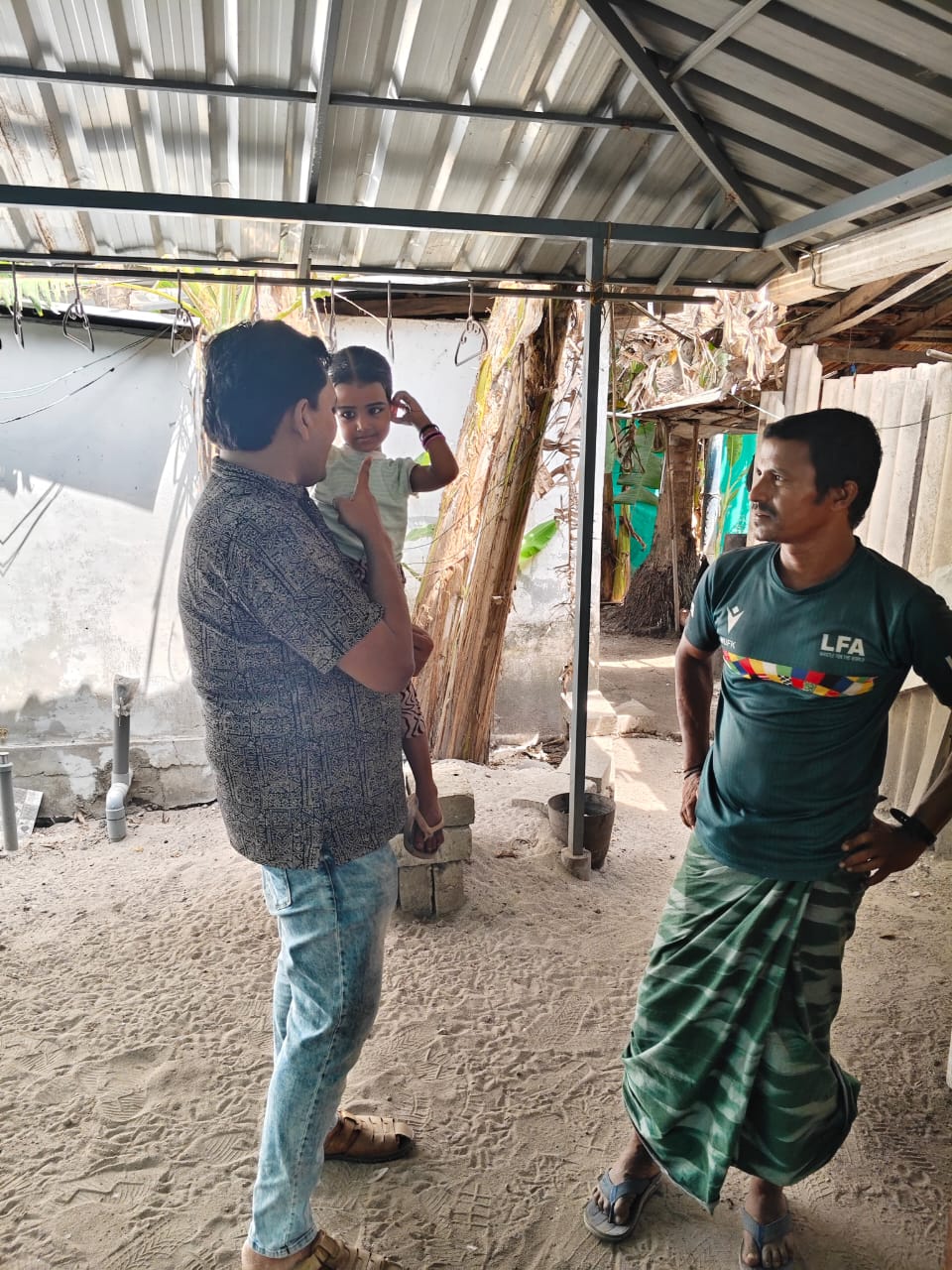
Very early on, I learned that meaningful public health begins only when institutions learn to listen beyond their offices — to communities, local leaders, and the quiet realities of everyday life. Many of the most important conversations in Lakshadweep happened far away from meeting halls and official presentations. They unfolded in tea shops, on fishing harbours, under coconut trees, and inside family homes. The success of any public health programme ultimately depends not on technical expertise alone, but on trust, participation, and collective ownership.
The Sea Connects More Than It Separates
For most people, the sea represents distance. In Lakshadweep, it represents connection. Every journey between islands reminded me that geography shapes not only movement but also identity. Boats carry medicines, food, ideas, stories, and relationships. The sea is both barrier and bridge, challenge and lifeline. Over time, I came to realize that understanding Lakshadweep requires understanding its relationship with the ocean. The sea is not merely a backdrop to island life; it is one of its principal characters.
Every Island Has Its Own Language
Not all languages are spoken through words. Communities communicate through traditions, relationships, histories, and shared understandings of the world. Over time, I learned that effective public health requires more than scientific evidence; it requires learning the language of the place where that evidence must live. In Lakshadweep, the most successful interventions were often the ones that adapted themselves to local realities rather than expecting communities to adapt to them. When ideas were carried by trusted local leaders, when messages respected culture, and when programmes reflected everyday life, they ceased to feel external. The lesson was simple: lasting change rarely arrives from outside. It grows from within.
Fragile Worlds Deserve Attention
Small islands teach an important lesson: fragility is not weakness. Coral reefs, lagoons, communities, traditions, and memories all survive through delicate balances. They endure not because they are powerful, but because they are resilient. During my visits, I witnessed subtle changes unfolding across the islands. Some brought opportunity. Others generated uncertainty. This memoir does not attempt to offer answers. Instead, it invites readers to pause and reflect on what may be gained through progress—and what may quietly disappear along the way.
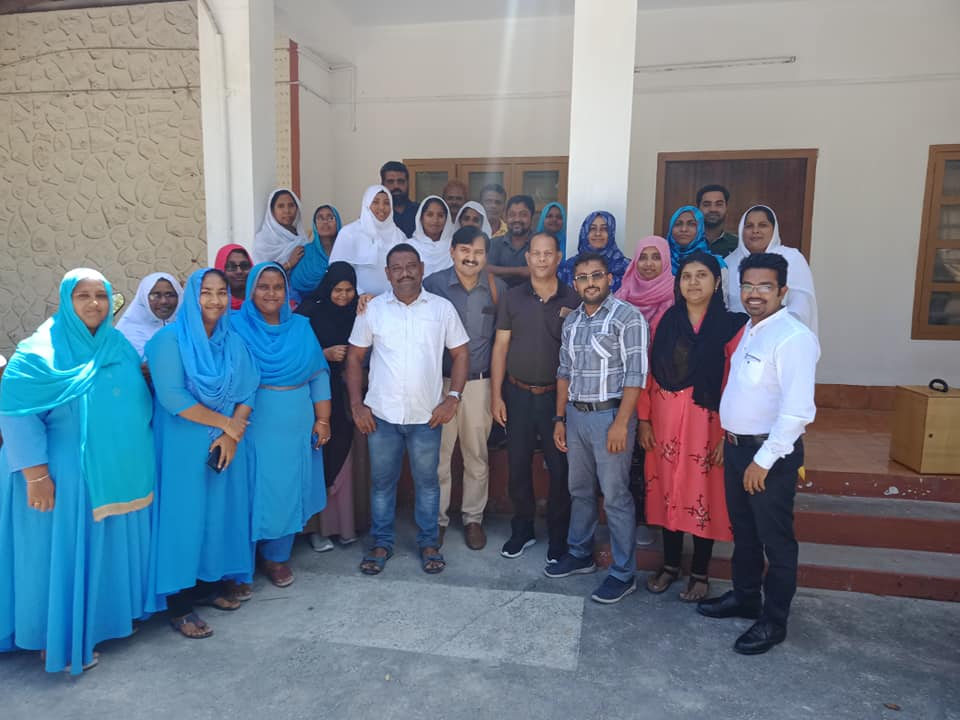
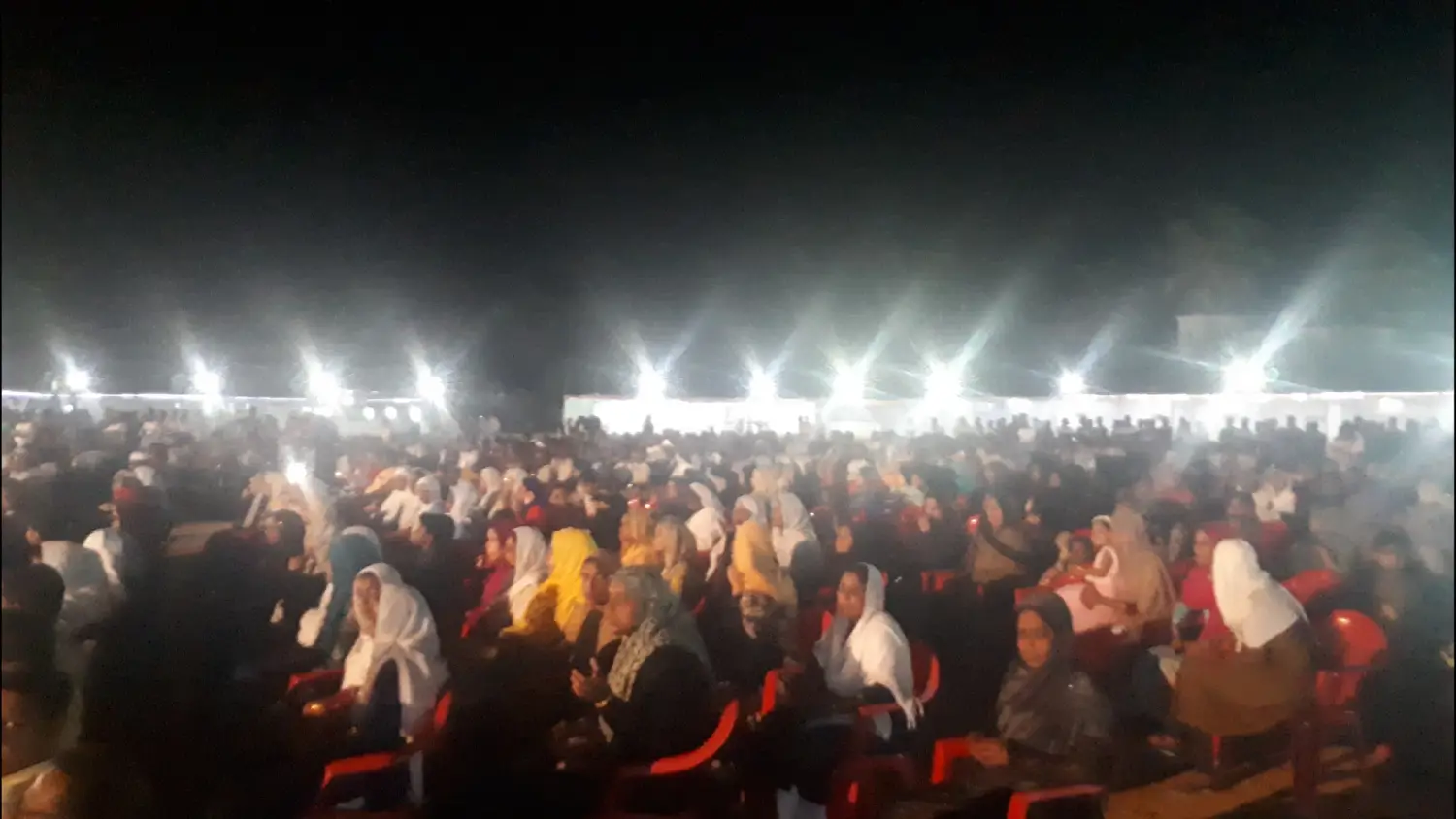
Gallery
Who Should Read This Book?
- Readers of literary nonfiction and memoir
- Travel and island literature enthusiasts
- Public health professionals and students
- Readers interested in ecology and environmental change
- Those curious about Lakshadweep and island cultures
- Anyone who enjoys reflective writing about place, memory, and belonging
Book Information

Title
Echoes from the Atoll: Inside India's First TB-Free Islands

Author
Dr. Rakesh PS

Genre
Literary Nonfiction Memoir

Release Date
August 1, 2026

Formats
Paperback | eBook