9 Lessons from Lakshadweep for India’s TB Elimination Programme
How a small group of islands offers important lessons in community ownership, locally adapted strategies and public health systems. India’s ambition to eliminate tuberculosis (TB) requires public health programmes that understand the communities they serve, respond to local realities and build systems capable of reaching people who are often missed by routine services. Lakshadweep offers an interesting perspective on this challenge. With a population of approximately 70,000 spreads across ten inhabited islands, the Union Territory faces geographical and operational challenges that are quite different from those in mainland India. Movement between islands depends on boats and weather conditions. The monsoon can disrupt transportation for months, and reaching each of the islands involves a particularly long sea journey. Delivering healthcare in such a setting requires careful planning, decentralised services and strong community participation. Between 2017 and 2024, Lakshadweep implemented seven rounds of population-wide TB screening. The programme progressively adapted its screening and diagnostic approaches, strengthened community participation and improved access to molecular testing. The annual incident TB notification rate declined from 39 per 100,000 population in 2015 to 11 per 100,000 in 2024, a reduction of approximately 72%. Lakshadweep received TB-Free certification under India’s sub-national TB-Free certification initiative. The journey offers lessons that extend well beyond the islands. These are not interventions that can simply be replicated everywhere. They are public health principles that can inform the design and implementation of TB elimination programmes across India. There is no one-size-fits-all model for TB elimination National programmes provide the framework, but implementation must respond to local realities. In Lakshadweep, geographical isolation influenced almost every aspect of TB service delivery. Sample transportation, movement of health workers, availability of diagnostic equipment and continuity of services had to be planned around inter-island connectivity and weather conditions. A strategy designed for a well-connected urban district could not simply be transferred to these islands. The programme had to adapt its operational arrangements to the geography. The same principle applies across India. The challenges of TB elimination in an urban slum are different from those in a tribal settlement, a migrant community, a remote rural district or a metropolitan city. Population mobility, housing conditions, access to healthcare, socioeconomic vulnerability and health-seeking behaviour all influence how services should be organised. The lesson: We need locally designed implementation strategies. TB elimination should be guided by a common national vision, but delivered through context-specific approaches. Screening must be proactive, sustained and population-oriented One of the defining features of Lakshadweep’s approach was the commitment to repeated population-wide screening. Between 2017 and 2024, seven rounds of screening were conducted. The screening strategy evolved over time. The initial rounds relied on a four-symptom screening approach and microscopy. Molecular testing was introduced in 2019, followed by chest radiography for household contacts from 2020. From 2022, chest X-rays were also offered to clinically vulnerable individuals. Across these rounds, screening coverage ranged from 68% to 84%. The programme recorded approximately 362,600 screening encounters, identified 9,402 people with presumptive TB and diagnosed 43 people with TB through screening. This experience demonstrates the value of going beyond passive case detection. Waiting for people to develop symptoms, recognise them and independently approach a health facility can leave significant gaps in case finding. India needs a combination of routine services, targeted active case finding and periodic intensified screening in populations and settings where the risk of missing TB is high. However, screening should not become an activity measured only by the number of people screened. It must be connected to timely diagnosis, treatment initiation and follow-up. The lesson: Screening is valuable when it is sustained, targeted and linked to a functioning diagnostic and treatment pathway. Diagnostics must be brought closer to the people A person should not have to overcome a long and complicated journey merely to obtain a TB diagnosis. In Lakshadweep, sample transportation across the sea was a major operational challenge. Samples collected on one island had to travel to testing facilities, and transportation delays could affect the time taken to establish a diagnosis. The decentralisation of molecular diagnostics was an important turning point. TrueNat technology was deployed across the islands, bringing molecular testing closer to communities and reducing dependence on long-distance sample transportation. Following these improvements, approximately 92% of samples were tested and results reported within 24 hours. This is an important lesson for TB elimination in India. Diagnostic technology has value not simply because it is available, but because people can access it at the right time and in the right place. Decentralisation does not mean that every diagnostic service must be available at every facility. It means designing a network in which sample collection, transportation, testing, result reporting and clinical action work together. India’s expansion of molecular diagnostics, digital reporting and newer screening technologies creates opportunities to build such networks, particularly in underserved areas. The lesson: A strong diagnostic network is one that reduces the distance—geographical, administrative and financial—between a person with TB and a confirmed diagnosis. Community ownership must go beyond awareness campaigns Public health programmes often speak about community participation, but participation becomes meaningful only when communities have a role in planning, implementation and accountability. In Lakshadweep, the TB elimination effort involved ASHAs, frontline health workers, local government representatives, religious leaders, women’s self-help groups, youth clubs and TB survivors. Island-level task forces brought different stakeholders together around a shared public health objective. These networks helped the programme reach households, build trust, address concerns and encourage people to access screening and treatment. The important distinction is between a programme that works for a community and one that works with a community. Awareness campaigns can improve knowledge, but they cannot independently address stigma, delayed care-seeking or the practical barriers people face when accessing services. Trusted local voices and community institutions can help bridge these gaps. This is particularly relevant in India, where local self-government institutions, community-based organisations, women’s collectives and civil society groups have an important role in public health. The lesson: Community participation should be institutionalized, not limited to occasional mobilisation activities. Communities must
How Lakshadweep Became India’s First TB-Free Geography: Lessons in Community-Based TB Elimination
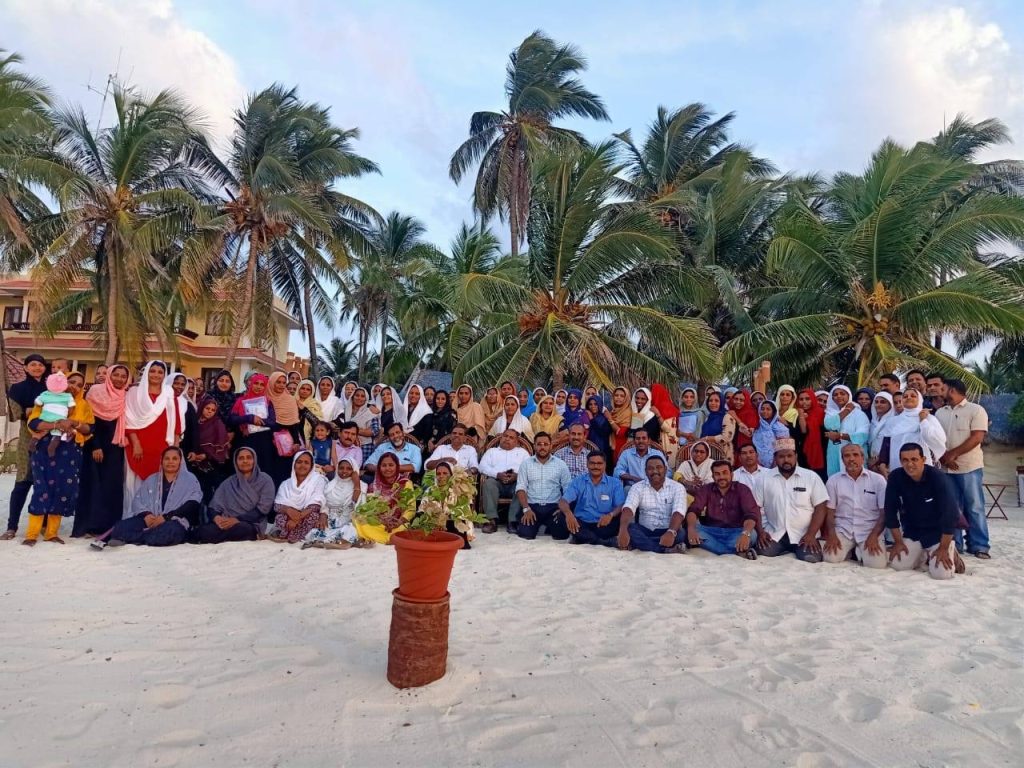
An account of how locally-adapted public health strategies, community ownership and a strengthened primary healthcare system helped Lakshadweep achieve TB-Free certification. Having been closely involved in Lakshadweep’s Tuberculosis (TB) elimination journey, I had the opportunity to witness how a public health programme gradually evolved into a collective community effort. This article reflects on the strategies, challenges and lessons from that experience. A remarkable achievement across ten islands What does it take to eliminate tuberculosis in a group of islands scattered across the Arabian Sea, where reaching a healthcare facility can depend on the weather, boat schedules and the availability of transport? Lakshadweep offers an important answer. With a population of approximately 70,000 spread across ten inhabited islands, this Union Territory presented a distinctive challenge for India’s TB elimination programme. Geographical isolation, limited connectivity, dependence on mainland supply chains and seasonal disruptions made conventional approaches to TB control difficult to implement. Yet, through sustained efforts between 2017 and 2024, Lakshadweep made remarkable progress in reducing its TB burden and became India’s first geography to receive TB-Free certification under the country’s sub-national TB-Free certification initiative. This achievement reflected a broader transformation in how public health services were organised and delivered. Community ownership, locally adapted interventions, decentralised diagnostics, active case finding and strong local leadership came together to make TB elimination a shared public health goal. The Lakshadweep experience provides valuable lessons for India’s TB elimination programme and for other geographically isolated communities attempting to achieve the elimination of TB. Understanding the geography: Why Lakshadweep needed a different approach Looking at a Lakshadweep map helps explain why delivering healthcare across the islands is fundamentally different from doing so in a mainland district. Located off India’s south-western coast, Lakshadweep consists of coral islands separated by stretches of the Arabian Sea. Its ten inhabited islands include Kavaratti, Agatti, Amini, Andrott, Kadmat, Kalpeni, Kiltan, Chetlat, Bitra and Minicoy. Agatti Island, for instance, is an important point of entry into the archipelago, while Minicoy lies at a considerable distance from the northern islands. Travel between islands is largely dependent on ships and other limited transport arrangements. The sea is central to everyday life, but it also creates significant challenges for healthcare delivery. Diagnostic samples collected on the islands often had to be transported by boat to reach testing facilities. A healthcare worker’s visit may have to be postponed because of rough weather. Essential supplies and equipment may take time to reach their destination. During the monsoon, movement between islands can become particularly difficult. These constraints have important implications for TB control. Tuberculosis requires timely diagnosis, uninterrupted treatment, and sustained follow-up. Delays at any stage can result in missed diagnoses, continued transmission and interruptions in care. A conventional mainland model, in which patients travel to centralised facilities for diagnosis and treatment, would not adequately address these realities. Lakshadweep therefore needed a TB elimination programme that adapted to its geography rather than expecting island communities to adapt to the limitations of the health system. Building the Lakshadweep TB elimination programme The Lakshadweep TB elimination mission adopted a sustained, population-wide approach to active TB screening, with annual campaigns conducted between 2017 and 2024. Rather than relying exclusively on people with symptoms approaching healthcare facilities, the programme proactively reached households and communities to identify people who might have TB. The screening strategy evolved over time as diagnostic capacity improved and the programme gained experience. During the initial rounds in 2017 and 2018, screening was primarily based on a four-symptom screening approach, followed by sputum microscopy. From 2019, nucleic acid amplification testing (NAAT) was introduced, improving the ability to identify bacteriologically confirmed TB. From 2020, chest radiography was increasingly incorporated into screening among household contacts. By 2022, clinically vulnerable individuals were also being offered chest X-ray screening. This gradual evolution was important. It allowed the programme to move beyond symptom-based identification and strengthen its ability to detect TB among people who might otherwise remain undiagnosed. The campaigns were not isolated activities. They were integrated with routine health services, community-level outreach and the existing TB programme infrastructure. Across eight screening rounds, estimated screening coverage ranged from 68% to 84%. Following a revision of the estimates, the total number of screening encounters was approximately 362,600. The campaigns identified 9,402 people with presumptive TB, and 43 people were diagnosed with TB through screening. These figures demonstrate the scale of the effort. More importantly, they reflect a health system that progressively improved its ability to reach people before they presented with advanced disease. Decentralizing diagnosis: Bringing services closer to people One of the most important lessons from Lakshadweep was that screening alone is not enough. Identifying a person with presumptive TB has little value if confirmatory diagnosis is delayed or difficult to access. In geographically isolated settings, the diagnostic pathway can become a major source of attrition. An important turning point was the decentralisation of molecular diagnostics. TrueNat machines were deployed across the islands, bringing testing closer to communities. Previously, samples had to be transported across the Arabian Sea to reach GeneXpert testing facilities, and this arrangement was not always reliable. Decentralising molecular testing substantially reduced dependence on inter-island and mainland transportation and improved access to timely diagnosis. Approximately 92% of samples were tested and results reported within 24 hours. This was particularly significant in an island setting, where delays caused by transport and logistical constraints could otherwise discourage people from completing diagnostic evaluation. The programme also worked to strengthen the treatment cascade. Treatment initiation exceeded 95%, while treatment success remained above 90%. The broader lesson is that an effective TB elimination programme must strengthen the entire continuum of care—from community screening and sample collection to diagnosis, treatment initiation and treatment completion. Decentralisation is not simply about establishing more laboratories or placing more equipment in peripheral facilities. It is about redesigning service delivery so that geography does not determine whether someone receives timely care. The community at the centre of TB elimination Perhaps the most important feature of Lakshadweep’s TB elimination journey was the role